Tag

Cult Films

Browsing

Sam Peckinpah’s Straw Dogs (1971) has often been considered a difficult and controversial text. Central to this is the depiction of gender, specifically concerning the role of Amy (played by Susan George) and the double rape that she undergoes, and the suggestion that the film is a parable of male dominance wherein the central character, David Sumner (Dustin Hoffman), ascends to being a ‘real’ man via a violent siege against marauding Cornish locals. The tag-line, featured on several posters for the film, suggested this very reading;

The knock at the door meant the birth of a man and the death of seven others

Given the predominant view of the film as a story of male birth, or re-birth, a consideration of the psycho-sexual imagery seems relevant particularly considering the proliferation of such imagery throughout the film. Images of emasculation, castration and phallic power are consistently invoked and develop the theme of birth referred to in the advertising. Creed (1993) offers a suitable model for considering these images and I will refer to her work, and Julia Kriteva’s concept of abjection, to explore the meanings of the psycho-sexual imagery of Straw Dogs. I propose that Straw Dogs gives us a drama of identity crisis tied to anxieties about castration and phallic power which culminates in David Sumner’s rejection of home and decision to enter into the symbolic order having previously retreated from it. In addition to Creed I will also refer to the writings of American psychoanalyst Erik H. Erikson in investigating the identity crisis which runs through the film. Before entering into the analysis proper it is worth outlining the validity of mapping Creed’s analysis onto Straw Dogs. Creed was writing about women in horror, whereas this film is more concerned with men. I am not claiming the character of Amy as an instance of the monstrous feminine, rather that the concepts that Creed deals with are applicable outside of films which deal centrally with the female monster. There is also some debate about the genre classification of Straw Dogs itself, whether it fits into the horror genre. Many of its contemporary reviewers typed it simply as a relocated western, though this surely has as much to do with the presence of Peckinpah as the film’s autuer as it does for any specific textual evidence. I would suggest that the film is a hybrid of several generic elements, including those of horror and bears comparison with another contemporary British set horror The Wicker Man (Robin Hardy, 1973); both concern the intrusion of an outsider into a closed community, and both make extensive use of sexual imagery. Whereas The Wicker Man deals with a conflict between Catholic and Pagan morality Straw Dogs is concerned with a breakdown in identity that precipitates a re-birth of the protagonist. In its use of a corrupt, parodic, family, the Heddens, Straw Dogs also invokes other horror films from the 1970s such as The Texas Chainsaw Massacre and The Last House on the Left. Given the generic and thematic content of the film Creed seems a pertinent source for an analytical framework.

Castration & Emasculation

Castration and emasculation imagery runs through Straw Dogs from the earliest images of the film. It is immediately present in the gift given by Amy to David in the first moments, a large man-trap. As Creed points out “man-trap” is a phrase euphemistically used to refer to the vagina. The trap itself, with such jagged edges, invariably invokes the concept of the vagina-dentata. This image lurks throughout the film, opened up it takes a prominent place in the living room of the farm-house waiting to be closed in the siege where David makes use of it, enclosing it around an invader’s head (a clear image of castration). Beyond the image itself, the issue of ownership of the trap prompts questions about the relationship between David and Amy. It is given to David as a gift, one which he places in the home. We must for a moment consider what this means for the dynamic of their relationship. We may consider this an acquiescence on Amy’s part to David, offering him ownership of her genitalia. However the fact that it remains so threatening signifies her potential to castrate, one which remains until it is co-opted by David in the defence of the house. This immediately complicates the gender identity of David himself. The film consistently refers to David as a figure of impotence. Physically he is smaller than the local villagers. He is unable to drive an English car correctly (he cannot master the gear lever, another potentially phallic symbol). His sexual relationship with Amy is one of childishness and humour. Outside of the bedroom their relationship itself is one of tension. David is destructive, willful, and deeply narcissistic. When the local Vicar and his wife visit, David plays bagpipe music at full-volume (something he will repeat during the siege) and proceeds to alienate his guests, forcing them to leave. The reason for David to be in Cornwall is, ostensibly, to complete a mathematical work, however the dialogue suggests that he is running away, although it is not specific from what (an idea re-iterated in the film’s trailers). David’s behaviour is consistent with someone stuck in a preadult stage of development, a stage of weak identity. As Erikson outlines;

That many of our patients break down at an age which is properly considered more preadult than postadolescent is explained by the fact that often only an attempt to engage in intimate fellowship and competition or in sexual intimacy fully reveals the latent weakness of identity (1980, 134).

David’s manipulation of Amy, attempting to get her to engage with chess and other intellectual pursuits is also consistent with Erikson’s analysis of identity crisis;

For where an assured sense of identity is missing, even friendships and affairs become desperate attempts at delineating the fuzzy outlines of identity by mutual narcissistic mirroring (1980, 134).

And;

A sudden collapse of all capacity mutuality threatens, and a desperate wish ensues to start all over again, with a (quasideliberate) regression to a stage of basic bewilderment and rage such as only the very small child knows (1980, 135).

David’s identity is weak because it is not fully formed, revealed by his inability to form proper relationships (sexual or not). He has not yet taken his place within the symbolic order, rather he has run away from it and taken refuge in the farm-house or as I suggest, the womb that it represents. Given this, Amy takes on the appearance of a mother rather than a partner (Amy is, significantly, the only maternal figure in the film). The threat of castration is consistent with castration anxiety felt by the child. During the final siege it is Amy, not David, who will wield a phallic shot-gun in defence of the home, saving David’s life. Here Amy transfers from being a castrating mother to a phallic woman, embodying twin emasculating threats. Further images of emasculation surround David and other male characters in the film. A key moment occurs during the duck hunt (arranged so that Venner can approach Amy). Here David must be leant a gun, he lacks one of his one. When he does eventually kill a duck he holds it in his hands and its limp neck reflects his impotent and emasculated nature. Despite the lack of mothers, the film has a surfeit of fathers, however they are often shown to be symbolically emasculated themselves. The Major, who acts as the village’s law-man and patriarch, possess a limp. Tom Hedden is a drunk. Niles’ father is incapable of controlling his own son. Perhaps the most significant father figure in the film is an absent one; Amy’s. Much is made of the fact that the farm house is from Amy’s family, or more especially her father. When asked by David which of the chairs in the house was her fathers, she replies, “Every chair is my Daddy’s chair”. It places into crisis the ownership of the house and the presence of this father is a further emasculating force for David.

Re-Birth into the Symbolic Order

The symbolization of the womb as house/room/cellar or any other enclosed space is central to the horror film (Creed 1998, 55).

Straw Dogs acts as an exploration of the meaning of the womb, as both a secure and insecure place. It is linked to the concept of unheimlich, where something is familiar and uncanny at the same time, and its ability to “disturb identity and order” (Creed 1998, 54). As Creed identifies, Freud cites the womb phantasy as an occurrence of the unheimlich, a nexus of the familiar and unfamiliar. The womb is a place we both remember but can never know;

He (Freud) allocates a central place to the subject’s former ‘home’, the womb. The uncanny is that place which is ‘known of old, and long familiar’, the place from which the individual has become alienated through repression (Creed 1998, 54).

There is further potential for the home to be seen as the womb particularly in its passageways and entrances. The siege, when David’s crisis is brought to a head, plays on this imagery particularly. Earlier in the film, when Amy is raped and in other scenes, the thresholds to the house are seen as fluid. The rat-catcher’s ability to enter the house and kill the cat is an active demonstration of this. Also the penetration of the house by various gazes, be it the workmen or Janice and Bobby Hedden, shows it to be consistently invaded. What should we make of this? The rape of Amy and the sense of invasion suggests an elision between Amy and the house – they are both penetrated in various ways, some invited, some not. David’s sudden defence of it seems curious then, as he has so markedly failed to do so before. However it is the existence of Niles in the house that redraws the relationships and pushes David further along his identity crisis path. From here he takes the role of the castrating woman from Amy (freeing her to become the phallic woman later in the scene). He defends the home/womb and the childlike Niles within via a series of dentata like acts. The defence is focussed on the doorways and windows of the house. Knives and glass are used. Boiling oil, an invocation of abject fluid, is thrown out. Feet, hands and heads of the invaders are attacked, stabbed and engulfed. The blood, wounds, and death throughout the siege clearly invokes the abject. The nature of the home/womb as the site of this blood suggests fears of the abject mother; David has unnaturally returned to the comfort and safety of the womb space, he has subsequently attempted to assume the mantle of the castrating mother. The revealing of Amy as the phallic woman pushes David out – finally he is capable of being reborn. His closing exchange with Niles about not knowing the way home represents his final break with maternal authority and his entry into the symbolic order as a fully formed individual. Witness the final images of David, face covered in blood, an image of rebirth. Straw Dogs is a drama of the symbolic order. David’s rejection of his place in the order, and the identity crisis it precipitates, prompts the confusion and chaos that surrounds him. It can only be resolved by the violent ejection from the womb space he has attempted to return to in an attempt to reclaim safety from the world and the burdens placed upon him. The collection of emasculating imagery, emasculated characters and symbolic events that occur are the back drop which forces David to confront his own position and accept his true identity outside of the womb, apart from the mother and at the head of the symbolic order.

Works Cited

Creed, Barbera (1993) The Monstrous Feminine. Abingdon: Routledge

Erikson, Erik H. (1980) Identity and the Life Cycle. New York: WW Norton
This article was first published by Bright Lights Film Journal.

During Donald Trump’s campaign for the White House, more than a few commentators noticed some similarities to George Wallace, and especially Wallace’s 1968 campaign for the American Independent Party. His statement that “If I ever get to be president and one of those demonstrators lays down in front of my car, it’ll be the last car they ever lay down in front of” (Small, 1999). Feels like exactly the sort of thing that Trump might tweet early in the morning. We wait to see how Hollywood reacts through its films to the current situation; in the meantime we can revisit a surprise hit that aimed to explore many of the tensions that fed Wallace’s popularity.

Joe is a curious film – a low-budget exploitation flick made by a director of soft-core pornography (who would go on to Paper Tiger, Rocky, and The Karate Kid) that made close to $20 million and launched the careers of Peter Boyle and Susan Sarandon (Powell & Garrett, 2009). It was a film that divided critics and audiences. Some people came out of theatres loving a character who had voiced their concerns about society (loving it enough that an LP of Joe’s speeches from the film was released). Others shouted threats at the screen: “We’re coming for you, Joe”; threats real enough for Peter Boyle to try to establish the difference between himself and his screen persona in several magazine interviews, and distancing himself from violent roles in the future (Durham, 1970). But what to make of this divisive film after 34 years? Does it still have the power to split an audience, or does time give us the distance to appreciate it anew?

Despite the title, we have to wait 20 minutes for Joe to appear. The film opens with Melissa (Sarandon) framed in a montage of hippie imagery. She drifts around town accompanied by a soft song. A pretty cliché, her life is exposed as a sham when we meet her drug-dealing boyfriend Frank, a typical late ’60s confusion of symbols (he calls himself The Lone Ranger and sells pills to young girls while professing to be an artist). They share a bath (but their feet never come clean), a bed, and a needle. When Melissa’s trip goes bad, Frank is elsewhere, leaving it to Melissa’s upper-middle-class parents (ad exec Bill Compton and WASP archetype Joan) to supervise her recovery. In a quest to recover some of Melissa’s clothes, Bill goes to her apartment and meets Frank. An exchange of views occurs, then Bill loses it, and, in a psychedelic blur, bashes Frank’s head against a wall. Gathering up the drugs (we’ll see them again) and his daughter’s clothes, Bill staggers to the American Bar & Grill where he meets Joe, a loud-mouth racist and homophobic hard-hat framed with a picture of Iwo Jima over his shoulder. When Bill accidentally confesses his crime, Joe sees an opportunity – not for blackmail but for hero worship. Excruciating class-comedy ensues as Joe tries to ingratiate himself into Bill’s life, having him round for Chinese take-out and serving peanuts in the tin. The film turns when Melissa, at home but not seen by her parents, hears of her father’s crime. She flees, and Bill, with Joe in tow, sets off into the Village to find her. These two men reveal their envy and desire for the hippie lifestyle, finding themselves in an orgy (pronounced with a hard “g” by Joe) in exchange for Frank’s drugs. They awake to find their wallets stolen and most of the hippies gone. After Joe slaps the location of a hippie commune out of one of the remaining girls, they set off and the film turns into a violent execution where Joe’s fantasies of blowing away the evils of society are made real. Bill faces the decision – join in and cover his crime, or stop Joe. He chooses the former and, as luck would have it, shoots and kills Melissa.

So far, so exploitation. The film shows enough “exposé” of hippie lifestyle, titillating nudity and violence to satisfy those who search for such things, but beneath the cheap veneer sits a more complex and interesting film that avoids simplistic moral conclusions, and ably dramatizes the ideological conflicts of the time. The film echoes the Puritan captivity narrative and westerns, like The Searchers, but concludes in a way that exposes the moralistic lies behind those archetypes. Ethan Edwards might relent at the end and hug his niece. Bill Compton shoots his daughter in the back. And no wonder – this film exposes everyone as a sham, white collar, blue collar, and hippie alike.

The hippies, despite all their counterculture slogans for peace and love, are happy to steal when it comes to getting high – besides, getting one back on the “squares” is entirely justified. Their confused depiction seems typical of the time; it recalls the Linny Raven character in Coogan’s Bluff, as if all the contradictions of the era (peace campaigns and campus riots) are rolled into one single stereotype. This confused depiction reflects the era and the older generation’s inability to understand the massive social changes occurring around them. It’s as if all social problems (no matter how contradictory) are projected onto the kids, those that oppose the values of the homes they were brought up in. The film’s original title, The Gap(dropped because of the rise of the eponymous fashion chain), reflects the film more accurately, identifying the distance between parents and children (tellingly Joe’s two boys never appear, always absent), upper and lower whites (united by their alienation, but divided by much else), and the shifts in society.

Bill Condon (played by journeyman TV actor Dennis Patrick) displays a nice line in self-loathing. An ad exec who knows how shallow his line of work and life really are. The murder of Frank leads him to Joe, and he gets a vicarious thrill out of his association with the anger and confusion the latter displays. Sure he thinks he’s better than Joe, but he loves the adulation he receives – after all, he’s done what Joe only dreams of.

What of Joe himself? Despite first appearing late on, Boyle dominates the film (even though he’s far too young to have been in WWII). He’s crass, racist, and sexist, but also patriotic, confused, and alienated. He spouts fake news (“42% of all Liberals are queer. That’s a fact. The Wallace people did a poll.”), blaming the liberals, the niggers, and the queers. The world around him is changing (blacks moving into his neighbourhood), and his unseen kids remain pointedly absent. His wife, Mary Lou (can you get any more down-home?), works to relentlessly appease him, but underneath he’s seething. His hideaway, the basement of his home, is bedecked with flags and guns – nostalgia for when he was killing “Japs,” for a time when he knew who the enemy were, and what to do about them. All those guns suggests how tenuous Joe’s masculinity really is, symbolically castrated by his own reliance on his beloved phallic symbols. It’s an excellent performance by Boyle, making Joe repellent but mesmeric.

For all their anger and masculine pride (in houses, wives, etc.), both Joe and Bill are shown to be a sham. Their adventure into the Village ends up with them both in a love-in, but consciously unmanned by the experience as they are rejected by the younger women (with Joe’s companion claiming “That must be a new record.”). They may hate the hippie lifestyle, but it’s a hatred born from envy – goddammit those kids are having a better time than they ever did.

Harking back to the captivity narrative, Melissa at first appears like a 20th-century Mary Rowlandson, a nice girl kidnapped by the feral outsiders. She is mistreated by her partner Frank, she’s a slave to him and the drugs, but when she curls up in bed she hugs her childhood doll, seeking solace in something safe and innocent. Unlike Rowlandson, Melissa isn’t reborn through her experiences; she rejects her parents’ life, realising how phony they are too. It’s a decision that costs her her life, after she pertinently questions her father, “Are you gonna kill me too?” Neither world works for her – each abandons her.

Far from offering a specific position, the ending leaves us with problems, not resolutions. Joe has finally indulged in his great desires, taking part in an orgy and executing the hippies. Bill caves in to Joe, unwilling to take a moral stand and responsibility for the murder of Frank (below). He could turn his gun on Joe and stop the slaughter, but instead he joins in to cover his own back. This one choice, the decision to protect himself rather than do the right thing, condemns Melissa. She dies, freeze-framed in the snow, having had a pitiless time. Abused by her boyfriend, controlled and lied to by her parents, and finally murdered by her father. The film’s titles play over a frame of Melissa lying in the snow and Bill standing in the porch of the commune. In the end, everybody, be they management or hard-hat, hippie or square, has failed.

In 1976, Taxi Driver was released, concerning a spiritual descendent of Joe, Travis Bickle. Boyle appears briefly as Wizard, an older taxi driver who attempts to counsel Bickle. Boyle’s performance is a clear counterpoint to Joe, with Wizard praising liberal values. His advice, of course, fails and the narrative is restaged, but this time the girl is rescued (whether she wants it or not). The captivity narrative returns, the confusion remains. Is Bickle a saviour? His costume confuses, a gunslinger with a mohawk. The good guys, the bad guys, all blend into one. At the Oscars that followed, Taxi Driver lost out to Rocky for best picture and best director. John G. Avildsen, having arrived with Joe, signalled another change in America with a more optimistic piece, in which it was very clear who we should root for.

Joe was clearly a film born out of its era, hitting the zeitgeist at precisely the right moment. Several months before it was released, the action of the film was prefigured by the real-life murder, on May 7, 1970, of hippie daughter by Detroit railroad worker Arville Garland. Garland had had enough of his daughter’s new lifestyle and friends, and went to her university and shot them. Although Norman Wexler’s screenplay for Joe had been completed before the crime, the parallels were obvious, not least for the trial judge who instructed the defence and the prosecution to watch the film, and screened the jury to make sure they had not (Thomas, 2014). Like the fictional Joe Curran, Garland had many supporters too, receiving letters and gifts while in jail.

Judged from a distance it’s clear to see how open the text is, feeding off the anxieties of different sections of society, allowing for different gazes to engage with the film differently. The contemporary reaction missed just how subversive the film is, taking neither side in the debate, but exposing the hollowness of both the older generation and the counterculture. In a time when the same old debates have resurfaced, Joe is well worth rediscovering.

Works Cited

Durham, Michael (1970). “Reluctant Hero of the Hardhats.”  Life. October 16, 69-70.

Powell, Larry & Garrett, Tom (2009). The Films of John G. Avildsen: Rocky, The Karate Kid and Other Underdogs. Jefferson, NC: McFarland.

Small, Melvin (1999). The Presidency of Richard Nixon. Lawrence: University of Kansas Press.

Thomas, Bill (2014). Second Wind: Navigating the Passage to a Slower, Deeper and More Connected Life. New York: Simon and Schuster.

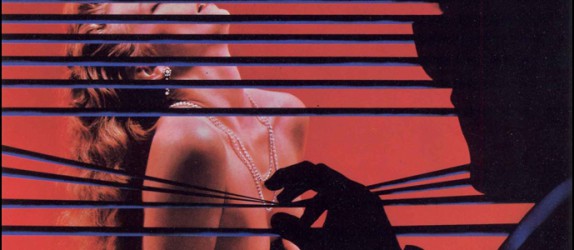
Having scandalized a nation with the excellent Dressed to Kill (1980) De Palma planned to go one better with his next Body Double, this time re-mixing Vertigo and Rear Window and then adding some madness that’s all his own. It’s more polished than its predecessor, but lacks the visceral shocks, although much is made up by the gleeful deconstruction of male spectatorship in a film in which a crime is solved because the protagonist (Craig Wasson as a loser B-Movie actor) surfs porn channels at night. The twist is so ludicrous it trumps all other elements in this thriller that once again throws the audience a dirty look and suggest that watching films might just be a bit perverted.

Wasson is Jake Scully an actor fired from a terrible vampire film because he suffers from claustrophobia. He goes home and finds his wife in bed with another man (worse than that, he makes her “Glow”). A new friend (Gregg Henry) offers him a place to stay, in what must be the most 1980s location ever, the Ultramodern Chemosphere complete with rotating bed and a telescope that spies on the hot woman dancing opposite. Mix in a mysterious Native American TV engineer and a murder plot soon hatches in which, in the least subtly phallic way imaginable, a woman is killed by a very large drill. Haunted by this woman Jake cracks up, watches porn and spies Melanie Griffith (as porn-star Holly Body) who has some familiar dance moves. Jake, being a bit mad, decides the best way to follow up his observation is to star in a porn-film opposite Holly, a scene which includes Frankie Goes to Hollywood singing their subtle anthem Relax (and I mean the actual band turns up, not just the song).

On paper nothing should work about this film. The protagonist is unlikable, the plot hinges on ludicrous behavior and coincidences and the finale involves a dog misidentifying his owner, but the whole is done with such (heavily 1980s) style and verve that it works, dashing though its running time at breakneck speed. It also makes some neat observations about the male audience, and the differences between being a Peeping Tom and watching porn. Just as in Dressed to Kill women are not represented well, there are only two really, but the men are far worse: a bunch of selfish, obsessive voyeurs. And De Palma’s willingness to throw in every thriller trick makes it hypnotic watching.

Pin It